
When your garage door malfunctions, it can throw off your entire day. Many issues can contribute to a faulty door, and it’s often hard to know what affects or causes it. You might also be wondering when it’s safe to troubleshoot and when you should turn to a technician.
This guide covers some of the most common problems, steps you can take, and how to know when to call a professional for help — whether that means an inspection, tuneup or repairs.
You might observe that your garage wall button works, but the remote does not — or that your motor hums but the garage door stays down. Some quick checks include:
If these steps don’t help, you can also try resetting the GFCI outlet or checking your breaker panel.
Photo-eye sensor misalignment is one of the most common garage door problems. This issue is usually demonstrated by:
Federal safety standards, particularly UL 325, require sensors to reverse the door if the beam is open. To help address this issue, you can:
You might be able to fix sensor misalignment on your own by gently adjusting them until both indicator lights are solid. If this doesn’t fix the problem, or if you notice damaged wires or brackets, contact a technician for further assistance.
Noise is another common garage door problem. You might hear high-pitched squealing or squeaking, loud metal-on-metal grinding sounds, or popping noises as the panels turn the corner. To determine the source of the noise, try running the opener while standing in the garage. If the sound is coming from the side tracks, the rollers may be the problem. If the sound comes from the overhead motor unit, it’s most likely the chain or gear.
You can apply a natural garage door lubricant to moving parts, like the roller bearings, hinges and springs, to reduce noise originating there. Avoid lubricating the tracks — grease can cause rollers to slide and impact function. It can also attract dirt and grime, worsening the grinding and sounds that come with it.
Unusual movement can indicate a dangerous situation. Do not continue to press the remote or button if you notice your garage door malfunctions by:
You can look for visual signs of damage, such as loose or fraying cables on the side drums, but it’s best to leave any adjustments to a professional. A skilled technician can reset the drum timing and cable tension to even out the door and stop it from jamming in the tracks.
Garage door springs are typically rated to last for around 10,000 cycles, or approximately seven years. A spring might be broken if you notice:
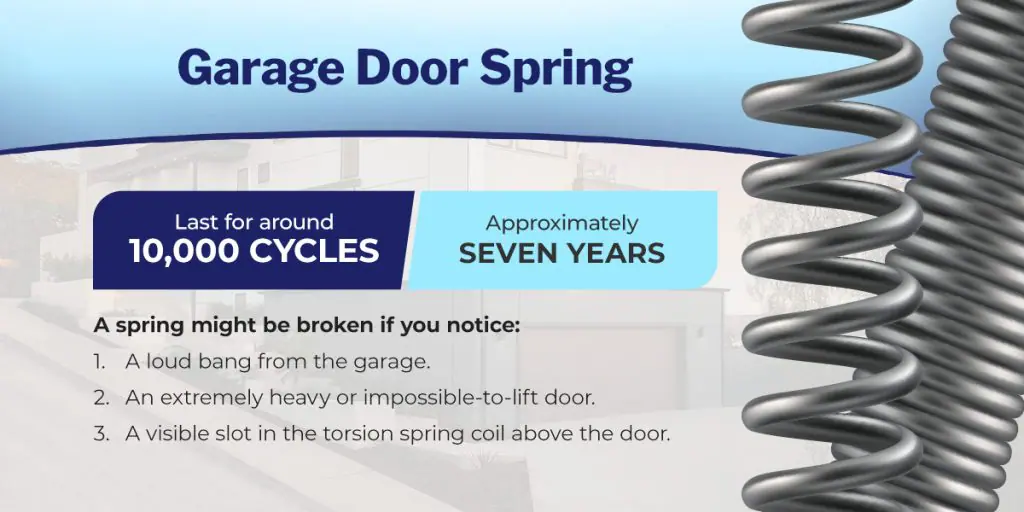
Torsion springs are under great amounts of tension, so avoid trying to handle this problem yourself. Professional technicians have the tools and experience to prevent injuries and other dangers.
If your door hangs at a skewed angle or the rollers have popped out of the vertical guide rails, the situation can be hazardous. It’s a good idea to disconnect the power. If you accidentally activate the opener, it could burn out the motor. You should also keep pets, children and others away from the area, as the door is unstable and could fall.
Do not force anything. Trying to push the rollers back in can bend the track or cause the door to collapse. The safest step you can take is to call a technician.
Loose wiring near the tracks and a crooked or slamming door can indicate a problem with garage door cables — the main moving mechanism for garage doors. Before troubleshooting your garage door, remember that cables act as the “muscles” that transfer spring power. If one breaks, the system fails. Changing both cables is the best way to keep equal tension, and the job is best left to an expert.
A faulty remote can cause major inconveniences when trying to operate your garage door and go about your day. To find the potential cause of this inconsistency, you can:
If these checks reveal problems or your garage door opener still doesn’t work after simple troubleshooting, consult an expert to evaluate.
A self-closing or quickly dropping door will most likely need service. To get a better idea, you can conduct a “balance” test by following these steps:
If the door slides back down, the springs may have lost tension. Call a professional for an adjustment.
Identifying the cause of common garage door and opener problems isn’t always as simple as it seems. If you experience any of these mishaps, it’s a good idea to reach out to a technician. While there are some steps you can take yourself, including troubleshooting sensors, adding lubricant and changing batteries, other concerns usually call for professional attention. Issues with springs, cables or off-track doors should always be left to an expert.
Turn to the team at Viking Overhead for professional garage door repairs and servicing. Whether you need garage door expertise or service to get your door back on track, you can contact us online to get started.